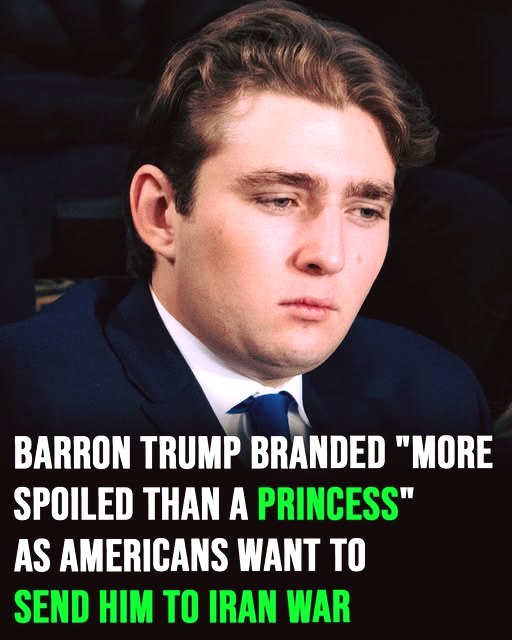
“Commentator Labels Barron Trump ‘Spoiled’ as Some Voices Urge Public Figures to Support War Efforts”
Social media erupted in recent weeks over public debate about the ongoing conflict between the United States and Iran, with some users turning their attention to Barron Trump, the youngest son of President Donald Trump.
Although the U.S. has been engaged in sustained military operations against Iranian forces and Iranian‑aligned groups since late February, there is no formal declaration of war by Congress, and legal scholars emphasize the distinction between war and combat operations.
Still, the situation in the Middle East has dragged on for weeks, involving strikes by both sides, diplomatic efforts, and ongoing military engagements that have caused casualties and regional instability.
Against this backdrop, online activists and commentators began urging Barron Trump — now in his early 20s — to enlist in the U.S. military or show support for American troops rather than remain a civilian.
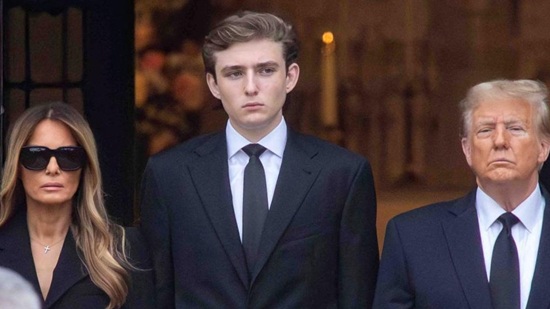
The hashtag #SendBarron trended on social platforms as users argued that while thousands of young Americans face danger overseas, the family of the president should demonstrate shared sacrifice.
One widely shared sentiment was that if political leaders affirmively support military action, their own children should also be willing to serve — a comment often tied to broader discussions about military draft equity.
Social media posts varied in tone, with some calling for Barron to enlist and others criticizing what they perceive as unequal distribution of burden between policymakers and the general public.
Amid these online reactions, some traditional media figures weighed in with strong commentary about Barron Trump’s lack of military service or enlistment, framing it as symbolic of wider political debates.
On the U.S. cable network MS NOW, anchor Lawrence O’Donnell spoke about the topic, openly questioning why Barron had not enlisted and contrasting his situation with historic examples of leaders’ children serving in times of conflict.
O’Donnell referenced World War II, drawing comparisons between the children of past leaders who served and Barron’s current civilian status, and characterized this contrast as a point of public criticism.
He also invoked figures such as the late Queen Elizabeth II, who served in uniform during that war, to underscore his point about shared service among leaders and their families.
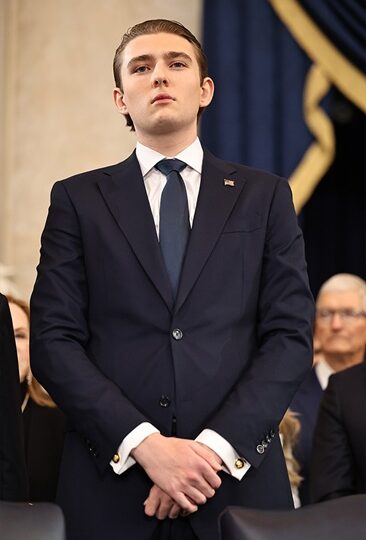
In his remarks, O’Donnell used strong language to describe Barron as “spoiled,” noting that he could have, in theory, joined the U.S. military by enlisting voluntarily upon turning 20.
However, it’s important to understand that no official draft is currently in place in the United States, and there is no public record of Barron Trump having pursued military enlistment or being registered for induction.
Under U.S. law, all male citizens and residents aged 18–25 are required to register with the Selective Service System, but that registration does not automatically mean a draft or compulsory service will occur.
In fact, for a draft to be reinstated legally, an act of Congress would be required, and there is no indication that such legislation has been passed or is imminent.
The online conversation and media commentary should therefore not be interpreted as an announcement that Barron Trump would be drafted or that he has been deemed ineligible for military service.
Some reports and social media users have claimed that Barron’s height — widely noted as well over six feet tall — could pose a challenge for certain military occupational specialties with height limitations.
The U.S. Army and other services do set height standards for specific roles that involve confined spaces or specialized equipment, but height alone does not universally disqualify someone from service.
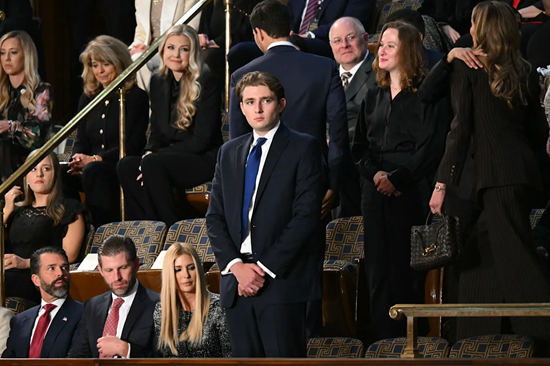
In fact, experienced service members have noted that height limits may apply to some roles, but waivers and alternative assignments are common, meaning a taller recruit could still serve in many capacities.
Media coverage of alleged “military exemptions” for Barron has not been confirmed by official Defense Department sources, and assertions about waivers, bone spurs, or other medical excuses remain speculative without verified records.
Critics of the Trump family’s military record often point to President Trump’s own deferments during the Vietnam era, when he received student exemptions and a medical deferment for bone spurs, a past that has been widely debated.
It’s worth noting that political commentary about enlistment and service often overlaps with broader critiques of how leadership classes relate to military commitments and civic duty.
Some social media users argue that every generation of the Trump family should share the risks that young Americans face when sent into conflict by presidential decisions.
Others responded with humor, skepticism, or ridicule, pointing out that height or medical waiver claims do not necessarily preclude service, as many tall individuals have successfully enlisted in various branches.
Importantly, the debate has also ignited broader discussion about how military service, sacrifice, and patriotism are discussed in the public square, especially during contentious foreign engagements.
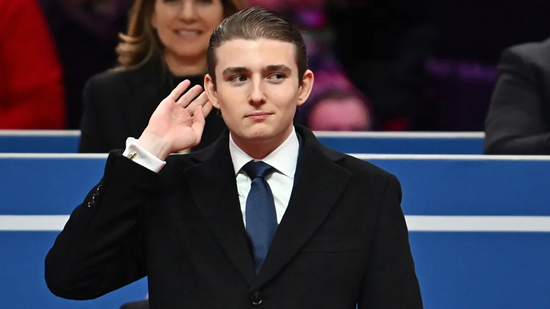
For some commentators, the viral calls for Barron to enlist are as much about expressing frustration with U.S. policy and leadership as they are about any realistic likelihood of him joining the armed forces.
A companion conversation in public discourse revolves around whether leaders should lead by example when making decisions that involve potential loss of life for enlisted personnel.