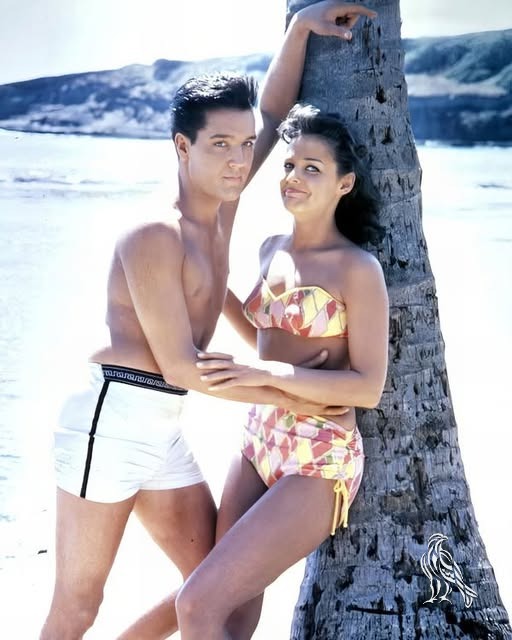
Elvis Presley hid a heartbreaking secret while filming Blue Hawaii and secret behind the scenes footage reveals the tragic truth about his final paradise vacation
Elvis Presley’s “Blue Hawaii” Success Story Had a Quietly Painful Side—And Rare Behind-the-Scenes Details Hint Why
When Blue Hawaii hit theaters in 1961, Elvis Presley wasn’t just a movie star—he was a global brand. Fans didn’t buy tickets only for the songs. They showed up to watch the effortless charm, the grin, the confidence, and that unmistakable screen presence that made “The King” feel larger than life.
Even if critics didn’t place Blue Hawaii among the most “serious” films in his catalog, the movie has stayed popular for one simple reason: it captures Elvis at peak charisma—playful, energetic, and completely watchable from the first scene to the last.
A Blockbuster That Created a Money-Making Hollywood Formula
The film became a major box office hit and helped lock in a formula that studios would repeat again and again: tropical locations, glamorous co-stars, light romance, and enough catchy tunes to sell a full soundtrack album. Elvis’s manager, Colonel Tom Parker, recognized the commercial power immediately—this style of movie was reliable, profitable, and easy to market.
What made Blue Hawaii slightly different from some earlier Elvis films was that his character, Chad Gates, wasn’t a professional singer. There’s no real story reason for him to break into song—yet he does it anyway, whether he’s on the beach or out on the water. And somehow, audiences loved that “no explanation needed” musical vibe. It became part of the charm.
The Soundtrack That Outlived the Movie
The soundtrack turned into a classic, powered by one of the most recognizable love songs ever recorded: “Can’t Help Falling in Love.” The track climbed near the top of the charts and remains a staple on playlists decades later. Plenty of people can hum the melody instantly—even if they’ve never watched the film.
Funny Mistakes Fans Still Spot Today
For all its popularity, Blue Hawaii wasn’t exactly a perfectionist’s dream. One blink-and-you-miss-it moment happens during the airport arrival: if you listen closely, you can hear real fans screaming in the background. The production drew crowds, and that excitement accidentally bled into the final audio.
The movie also includes a few classic continuity slip-ups. In one driving scene, hands shift positions between cuts. In another, a character appears to “teleport” from one side of the car to the other for a better camera angle. And then there’s the ukulele moment—Elvis strums with enthusiasm, but sharp-eyed viewers noticed the finger placement doesn’t always match the smooth chord changes heard on the soundtrack.
The Casting Change That Altered Everything
Originally, dancer and actress Juliet Prowse was expected to star opposite Elvis after their earlier success in G.I. Blues. But behind-the-scenes reports say negotiations fell apart after she requested extra perks, including having her personal staff flown in on the studio’s dime. When the studio declined, she exited the project.
That opened the door for Joan Blackman—and the on-screen chemistry that followed became one of the film’s most talked-about elements. Blackman later shared that there was an immediate spark between them. Elvis, by many accounts, was genuinely taken with her and hoped she’d appear in more of his movies. But Blackman wanted to build her career on her own terms, not as a celebrity attachment.
The “Paradise” Setting Didn’t Match Elvis’s Mood
On screen, Hawaii looks like pure freedom: sunshine, beaches, laughter, and music. But multiple behind-the-scenes recollections suggest Elvis wasn’t feeling carefree at all.
Paramount publicity director Anne Fulchino later described him as frustrated and even embarrassed at times, believing he could do more dramatic, meaningful acting—but feeling boxed into light musical comedies that were chosen for commercial safety, not creative growth. In other words, while the movie sold a fantasy, Elvis was privately wrestling with the reality of being stuck in a lane he didn’t fully respect.
Pranks, Golf Lessons, and a Car He Had to Own
Even with that frustration, Elvis kept the set lively. He was known for joking around, and one prank went especially far: he and girlfriend Anita Wood reportedly staged a fake emergency that convinced people he had stopped breathing. Panic spread, calls were made—then Elvis popped up laughing, satisfied he’d gotten a genuine reaction.
Off camera, he also took golf lessons from champion Gary Player, who later teased Elvis’s swing with a brutally funny comparison. Elvis, as always, laughed it off.