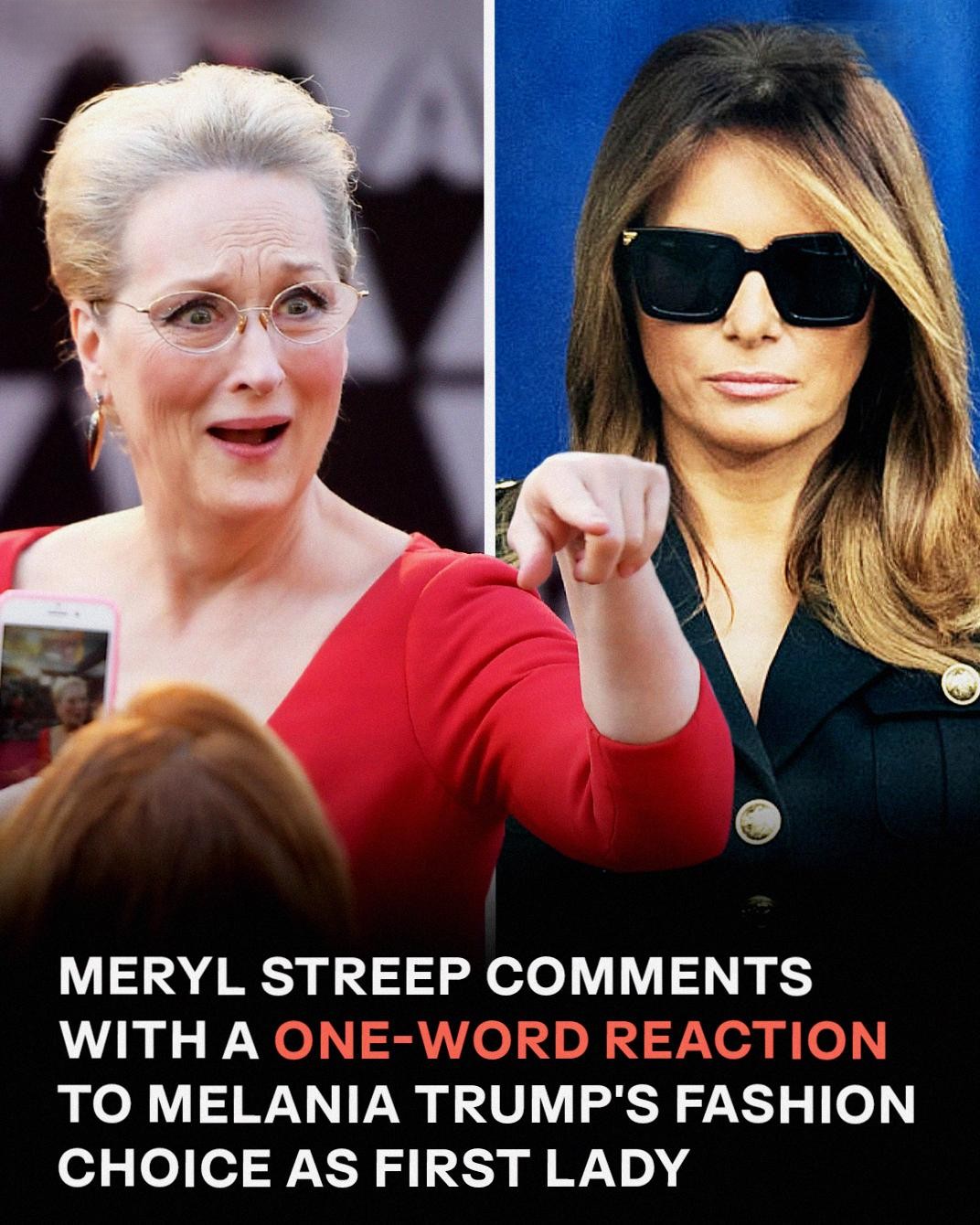
The Destabilizing Jacket, Why Meryl Streep Explosive New Vogue Interview Just Ripped Open Melania Trump Most Controversial Fashion Scandal
Meryl Streep’s Vogue Interview Reignites the Melania Trump Jacket Controversy—and the Power of Political Fashion
In celebrity culture and Washington politics, clothing isn’t merely “style.” It’s messaging—often as strategic as a speech, and sometimes louder than one. That idea surged back into headlines after a major Vogue cover interview featuring Meryl Streep in conversation with longtime editor Anna Wintour. What started as a polished discussion about image and identity quickly shifted into a sharper debate about one of the most talked-about fashion moments of the Trump era: Melania Trump’s “I Really Don’t Care, Do U?” jacket.
Streep didn’t treat the controversy as tabloid trivia. She framed it as a case study in political optics—the way public figures use symbols, branding, and wardrobe choices to shape narratives in real time.
When Fashion Becomes a Message in a Crisis
During the interview, Wintour highlighted women whose style feels personal and consistent, pointing to figures such as Michelle Obama as examples of fashion that reads as authentic rather than performative. When the conversation touched on Melania Trump’s appearance and the notion that she “looks like herself” in her clothing, Streep reportedly redirected the focus to context—specifically, the moment in June 2018 when Melania wore an olive-green Zara parka with the phrase “I Really Don’t Care, Do U?” while visiting a facility connected to the migrant family separation crisis at the U.S.-Mexico border.
Streep described the image as “destabilizing”—not because of the brand or the styling, but because of what the slogan appeared to communicate at a time when the public was witnessing intense human suffering. In her view, that jacket wasn’t neutral. It was a statement that could not be separated from the setting in which it appeared.
Why the Jacket Still Sparks Outrage Years Later
The backlash in 2018 was immediate. Photos traveled globally within minutes, and critics argued the message looked cold and dismissive—especially given the visit’s humanitarian backdrop. Melania Trump later offered a different explanation, saying the slogan was aimed at her critics and the media rather than the children affected by the policy. She urged people to judge her actions, not her outfit.
Streep’s point, however, is that in modern media culture, images often become the headline. And when you’re one of the most photographed people in the world, your wardrobe can function like a billboard—whether you intend it to or not.
Streep’s Bigger Argument: Power, Empathy, and Public Behavior
Streep’s comments also connect to themes she has raised before about leadership and public conduct. She has long argued that when influential figures model cruelty, mockery, or indifference, it doesn’t stay contained—it spreads. In that framework, the jacket becomes more than a “fashion scandal.” It becomes an emblem of a broader cultural shift where defiance is rewarded more than compassion, and where symbolism can be used to provoke rather than reassure.
That’s why her Vogue remarks resonate now: they aren’t really about a parka. They’re about what happens when public relations, branding, and political identity merge into a single image that millions interpret instantly.
Why This Story Is Trending Again
The timing matters. Melania Trump’s recent public appearances have revived online debate about her public role and her carefully managed image. When Donald Trump publicly praised her at a high-profile event and leaned into a “glamour” narrative, social media responded with renewed scrutiny—analyzing everything from body language to tone to presentation.
Streep’s critique cuts against that glossy framing. Her argument suggests that the most revealing moments aren’t always the red-carpet visuals or staged photo ops—they’re the symbols that appear when the stakes are highest.
The Real Takeaway: Political Fashion Isn’t Superficial Anymore
This is what makes the conversation so sticky: fashion communicates, and in the political arena it can communicate faster than policy. A slogan on a jacket can become a global headline. A styling choice can read like a signal. And for a first lady—someone whose image is constantly curated, photographed, and interpreted—there’s almost no such thing as “just clothes.”
Trends fade, but iconic images don’t. Whether people see that jacket as a misunderstanding, a provocation, or a deliberate message, it remains one of the most enduring examples of how power dressing can collide with public outrage—and how a single outfit can shape a legacy.
What do you think—was the jacket a meaningless fashion choice, or a calculated message? Share your take in the comments, and if you want more breakdowns on celebrity news, political image strategy, and culture headlines, stick around and explore our latest stories.