The Little Scalp Invader: What Parents Should Do When a Strange Bug Appears in Their Child’s Hair

It often begins quietly.

You’re brushing your child’s hair after a bath. Braiding it before school. Running your fingers through it during a movie.

Then you see something.

A tiny speck.

And it moves.

Your heart jumps. Your thoughts race.

Is it lice?
Is it a tick?
Is it dangerous?
How long has it been there?

Take a breath.

Most scalp bugs are manageable.
Most situations are not emergencies.
And most parents handle this far better than they expect to.

This guide walks you calmly through what you might be seeing, what to do next, and how to move from panic to confidence.


Why This Feels So Alarming

The scalp feels personal. Protective instincts kick in fast when something unfamiliar appears there.

That surge of anxiety is normal. Humans are wired to react quickly to potential parasites.

But most childhood scalp discoveries fall into predictable categories — and once identified, they’re very manageable.

The first step is simple:

Identify what you’re dealing with.


The Three Most Common Possibilities

In most cases, a bug found in a child’s hair falls into one of these categories:

  1. Head lice

  2. A tick

  3. An accidental visitor

Each looks different. Each requires a different response.


1. Head Lice

Head lice (Pediculosis capitis) are the most common scalp visitors in children.

What They Look Like

  • About the size of a sesame seed

  • Tan, gray, or light brown

  • Wingless

  • Fast crawlers

  • Built to cling tightly to hair

They do not jump.
They do not fly.
They spread mainly through head-to-head contact.

The Real Clue: Nits

Often, the eggs — called nits — are easier to find than the lice themselves.

Nits are:

  • Tiny and oval

  • Yellowish or white

  • Firmly attached to the hair shaft

  • Usually found behind the ears or near the neck

Unlike dandruff, they do not flick away easily.


Important: Itching Isn’t Immediate

Many parents expect intense scratching right away.

But itching comes from sensitivity to lice saliva — and that sensitivity can take days or even weeks to develop.

Some children have:

  • No itching

  • No complaints

  • No obvious symptoms

Routine scalp checks are more reliable than waiting for scratching.


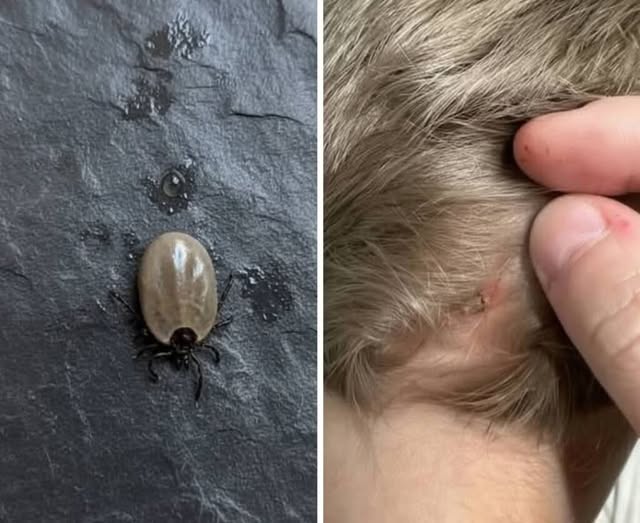
2. The Tick

Ticks behave very differently from lice.

What Ticks Look Like

  • Dark brown or black

  • Oval-shaped

  • Flat before feeding

  • Swollen and grayish if attached for a while

  • Eight legs (though hard to see in hair)

Ticks don’t roam quickly through hair.

They attach.

If the bug appears embedded in the skin and isn’t freely crawling, a tick is possible.

Ticks can carry illnesses such as:

  • Lyme disease

  • Alpha-gal syndrome

Most tick bites do not result in illness — especially when removed promptly and properly.


3. The Accidental Visitor

Sometimes, it’s neither lice nor a tick.

Children play outside. Roll in grass. Sit on carpets. Share pillows.

Occasionally, a small insect simply wanders into their hair.

If you see:

  • One single bug

  • No attached eggs

  • No scalp irritation

  • No additional insects

It may just be a temporary hitchhiker.

Removal and a rinse are usually enough.


What To Do Immediately

When you spot a bug:

Step 1: Stay Calm

Children mirror your reaction.

Avoid words like “infested” or “gross.”

Instead say:
“Let’s take a closer look.”

Your calm tone helps them stay relaxed.


Step 2: Remove It Safely

If crawling freely:

  • Use tissue or tweezers

  • Seal it in a bag if you want identification

  • Wash hands

If attached (possible tick):

  • Use fine-tipped tweezers

  • Grasp close to the skin

  • Pull upward steadily

  • Do not twist

After removal, wash the area with soap and water.


Step 3: Examine the Scalp Carefully

Under bright light, check:

  • Behind ears

  • Nape of neck

  • Crown of head

Look for:

  • Additional bugs

  • Nits attached to hair

  • Redness

This helps you respond accurately instead of react emotionally.


Treating Head Lice Calmly

If lice are confirmed, avoid panic-buying multiple treatments.

The Wet Combing Method

Many pediatric professionals recommend systematic combing as a safe and effective method.

You’ll need:

  • Thick conditioner

  • A high-quality metal nit comb

  • Bright lighting

  • Patience

How To Do It

  1. Apply conditioner to damp hair.

  2. Divide hair into sections.

  3. Comb from scalp to ends slowly.

  4. Wipe comb on white tissue after each pass.

  5. Repeat every 3–4 days for two weeks.

Consistency is key.


What About Medicated Shampoos?

If choosing treatment products:

  • Follow instructions exactly

  • Don’t overuse

  • Avoid mixing products

  • Consult your pediatrician if unsure

Overuse doesn’t improve results — it only increases irritation.


After a Tick Bite

After removing a tick:

  • Save it in alcohol (optional but helpful)

  • Note the date

  • Monitor the area

Watch for:

  • Expanding rash

  • Fever

  • Fatigue

  • Joint pain

If symptoms appear, contact your healthcare provider.

In most cases, nothing further happens.


Cleaning the House: Don’t Overdo It

This is where many parents go too far.

Lice cannot survive long away from the scalp.

Reasonable cleaning includes:

  • Washing pillowcases

  • Washing recently worn hats

  • Washing bedding

You do not need to:

  • Fumigate the home

  • Throw out furniture

  • Bag toys for months

Moderation protects both your sanity and your schedule.


Addressing the Stigma

There is unnecessary shame around lice.

Let’s clear that up.

Myth: Lice mean poor hygiene.
Truth: Lice prefer clean hair because it’s easier to grip.

Myth: Only certain families get lice.
Truth: Lice spread through close contact — especially among children.

Myth: It reflects bad parenting.
Truth: It reflects normal childhood interaction.

Shame doesn’t solve the problem. Calm action does.


Talking to Your Child

Children may feel embarrassed.

You can say:

“This happens to lots of kids.”
“It’s not your fault.”
“We’ll fix it together.”

Keep it matter-of-fact.

Confidence from you builds resilience in them.


Prevention Without Anxiety

Helpful habits include:

  • Regular scalp checks

  • Avoiding head-to-head contact during outbreaks

  • Tying long hair back for school

You don’t need constant fear.

Just awareness.


When To Call a Doctor

Seek medical advice if:

  • A tick bite becomes red or infected

  • Fever develops

  • Rash spreads

  • Lice persist after consistent treatment

Most scalp bugs resolve without complications.


The Bigger Perspective

Finding a bug in your child’s hair feels huge in the moment.

But here’s what matters:

You noticed.
You acted.
You learned.

Childhood includes scraped knees, splinters, colds — and sometimes scalp bugs.

They are temporary chapters, not parenting failures.


Final Takeaway: Calm Over Panic

A tiny moving speck can feel overwhelming.

But once identified, most scalp invaders are:

  • Treatable

  • Temporary

  • Common

You don’t need fear.

You need:

Good lighting.
Steady hands.
A quality comb.
Clear information.

And now, you have all four.

This is just one small moment in the long story of raising a child — and one you’re fully equipped to handle.