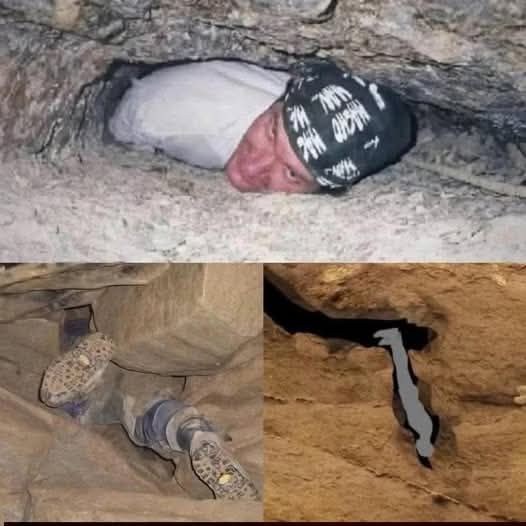
What Happened After Being Stuck in a Tiny Hole Surprised Everyone
Trapped in the Tightest Space: When Curiosity Meets Danger
You don’t have to be there to feel it.
One glance at the scene is enough—your chest tightens, your breath shortens, and your mind immediately searches for an escape that isn’t there. A person is wedged deep inside a narrow rock crevice, pressed so tightly that even turning a shoulder feels impossible.
There’s no space. No room to shift. No obvious way out.
And yet, panic didn’t come first. Curiosity did.
That’s how these stories always begin. Not with fear, but with the pull of the unknown.
Caves, tunnels, hidden passages—they call to something primal. They promise discovery, adventure, and the thrill of exploring spaces few ever see. For explorers, that pull is irresistible.
The entrance looks manageable at first—a narrow passage you can crawl through carefully. Step by step, inch by inch, you go in.
At first, it feels controllable. Then the space shifts. The walls press closer. Your body no longer fits the way you expected.
That’s the moment everything flips.
The person inside the crevice has pushed far enough that turning back isn’t simple. Shoulders are compressed, torso pinned, legs stretched with no leverage. Breathing itself becomes a challenge. Every inhale feels tight, every exhale shallow.
And then panic hits.
It’s automatic. The brain senses danger. Heart races. Muscles tighten. Instinct screams: move! Push! Escape!
But in a space like this, force is the enemy. Rock doesn’t yield. Struggling only makes you more stuck.
What works here isn’t strength—it’s control. Calm, deliberate, patient movements. Small shifts, careful angling, precise breathing. Experienced cavers know that stillness can be life-saving. Sometimes the safest move is to pause, breathe, and think.
Preparation matters. Helmets, lights, communication, someone aware of your location—these are not optional. They’re survival tools. Without them, mistakes are amplified, and the margin for error disappears.
This scene isn’t just about physical danger—it’s a lesson in human nature. Curiosity drives us into the unknown. It fuels exploration, innovation, and discovery. But curiosity without caution is risky.
If the person escaped, it was likely through patience, careful adjustment, and perhaps guidance from someone outside. Inch by inch, breath by breath, control returned.
Moments like this leave more than relief. They leave awareness:
How quickly control can vanish.
How spaces that seem manageable can shift unexpectedly.
How nature operates on its own terms, without compromise.
The takeaway is simple: pushing forward isn’t always the answer. Sometimes survival—and success—comes from slowing down, breathing, and thinking carefully.
Even when the walls feel like they’re closing in, clarity and patience are the real keys to freedom.