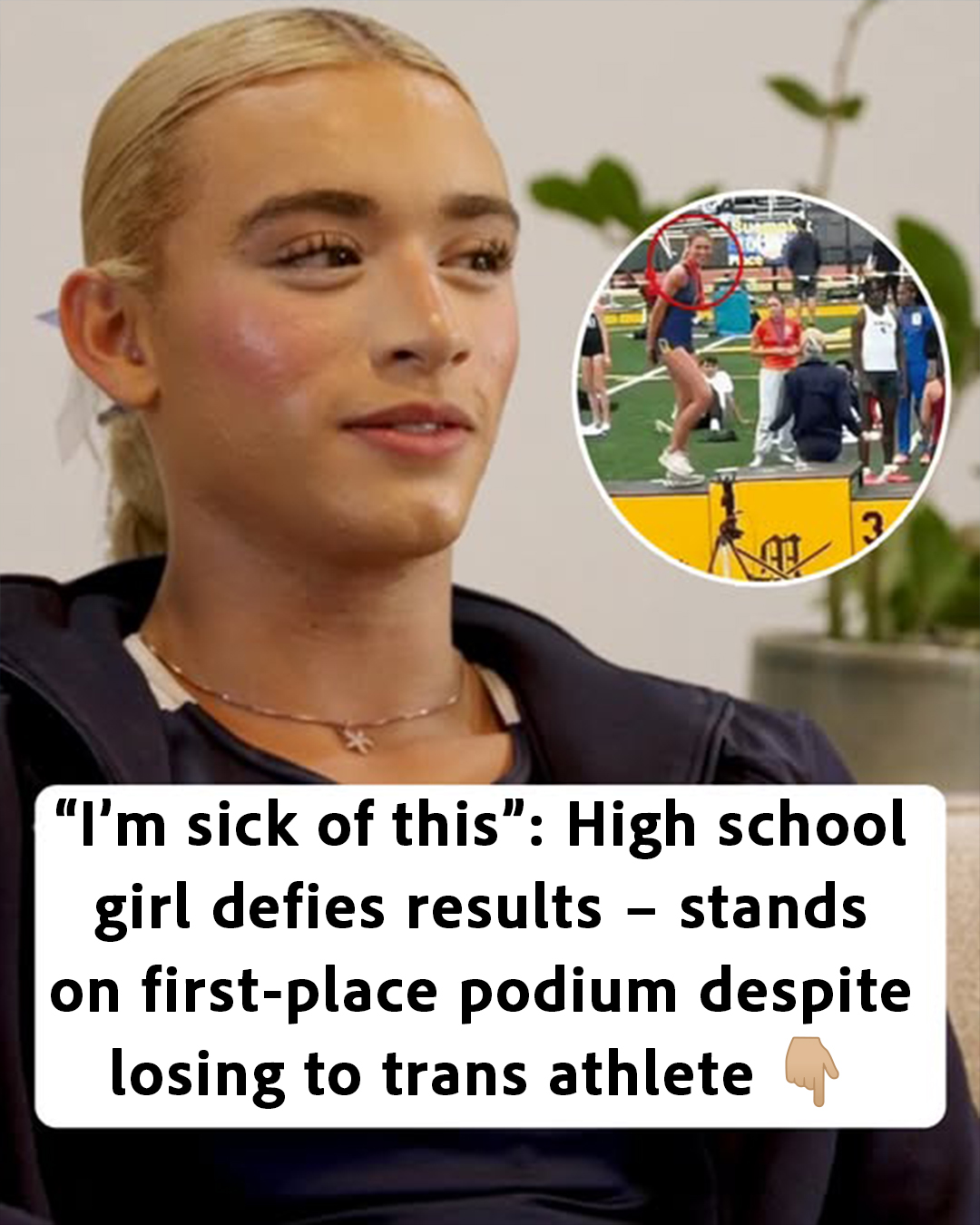
High school girl claims first-place podium spot despite losing to trans athlete
High School Track Podium Moment Sparks National Debate on Fairness, Inclusion, and Student Athlete Rights
What unfolded on that high school podium wasn’t just a flash of teenage defiance for the cameras. It was a raw, emotional snapshot of a much bigger conflict—one that’s playing out in school districts, state legislatures, and athletic associations across the country.
At the center of it are two powerful, very human fears. On one side are girls and young women who believe the promise of fair competition in women’s sports is being tested, along with the scholarships, records, and opportunities they’ve worked for over years of relentless training. On the other side are transgender student athletes who hear, again and again, that their participation alone is controversial—sometimes framed as a problem rather than a person.
Both groups are still kids. Both are under intense pressure. And both are being pulled into a cultural and political battle they didn’t create.
More Than a Viral Clip: The Real Cost of High School Sports Controversies
Social media captured the quiet statement on the podium. What it didn’t capture were the early mornings, the injuries, the self-doubt, and the sacrifices that come with chasing a medal in competitive high school athletics. It didn’t show the teammates trying to stay loyal to friends on both sides. It didn’t show the coaches navigating a maze of rules while trying to protect every athlete’s wellbeing. And it didn’t show parents wrestling with two responsibilities at once: defending their daughters’ futures while teaching empathy and respect.
Moments like this become headlines because they’re easy to package: winner, loser, controversy. But the reality is messier. The stakes are high—especially when college recruiting, potential athletic scholarships, and long-term opportunities can hinge on fractions of a second or a single placement.
Fairness and Dignity Don’t Have to Be Opposites
This debate won’t be resolved by one podium moment, one school policy, or one viral video. It will take careful, good-faith work—clear eligibility standards, transparent rules that athletes can understand, and a commitment to protecting students from harassment and humiliation.
Some people focus primarily on protecting women’s sports and maintaining competitive equity. Others focus on transgender inclusion in sports and ensuring students aren’t excluded or targeted. The truth is, a responsible conversation has to make room for both concerns without turning teenagers into talking points.
Between outrage and denial, there’s still a choice: to aim for fair competition while refusing to strip anyone of dignity. And to remember that behind every medal, every ranking, and every podium photo, there’s a young person trying to find their place in the world.
What do you think schools should prioritize when setting policies for student athletics—competitive fairness, inclusion, or a balance of both? Share your thoughts in the comments, and if you want more updates on high school sports, education policy, and athlete rights, stick around and read our latest articles.